
HOME
REGIONS OF ITALY
PLACES IN ITALY
TRAVEL GUIDES
Italy in Photos
Lungolago Roma, 37011 Bardolino, Italy (May 2018)
Asciano
Located in the heart of Tuscany, Asciano is a small town that captures the essence of the region’s timeless beauty and rural soul. Set amid the iconic rolling hills of the Crete Senesi, Asciano offers a striking landscape of pale clay ridges, cypress-lined roads, and vast open skies that change colour with the seasons. Less crowded than Tuscany’s major cities yet rich in history and culture, Asciano provides an intimate and authentic window into traditional Tuscan life.
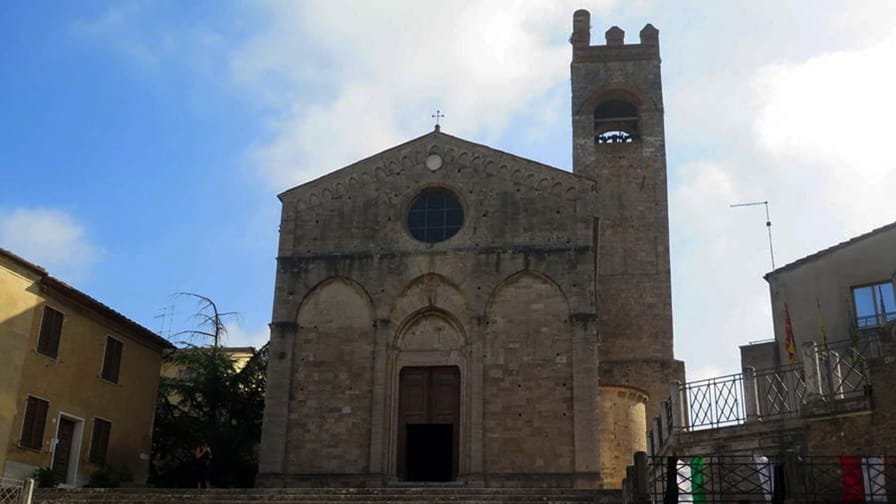
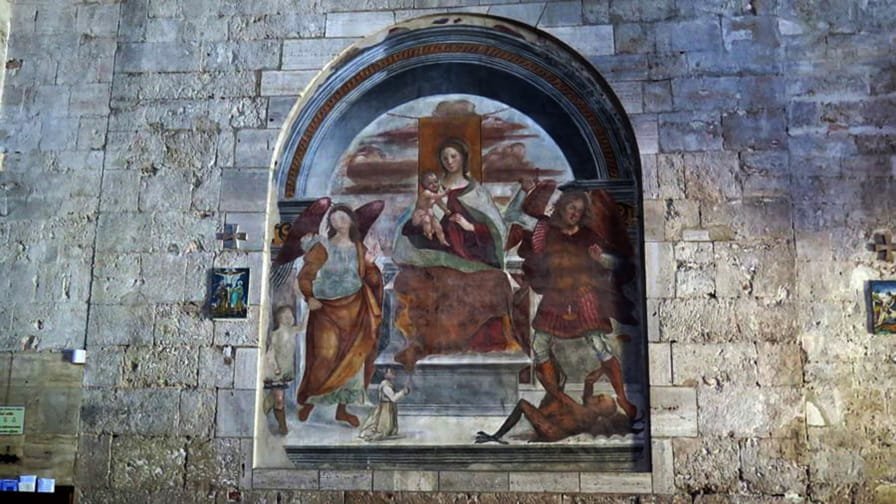
Asciano’s origins date back to Etruscan and Roman times, though it flourished during the Middle Ages as a fortified settlement along important trade routes connecting Siena to the surrounding countryside. Today, remnants of its medieval past are visible throughout the town, from sections of ancient walls to narrow streets that follow the original urban layout. At the centre of Asciano stands the Basilica of Sant’Agata, a Romanesque church whose simple yet elegant façade reflects the town’s early religious importance. Inside, centuries of devotion and craftsmanship are evident in its artwork and architectural details.
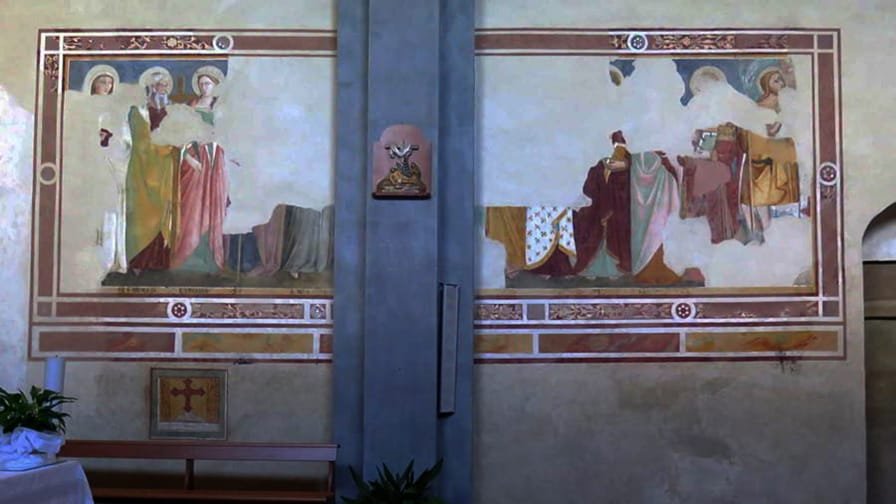
Despite its modest size, Asciano holds a notable place in Tuscany’s cultural landscape. The Museo Civico Archeologico e d’Arte Sacra houses an impressive collection of Etruscan artifacts discovered in the surrounding area, underscoring Asciano’s deep historical roots. The museum also preserves religious art and frescoes that trace the evolution of local artistic traditions. These collections provide valuable insight into the civilizations that shaped the region long before the Renaissance transformed Tuscany into a cultural powerhouse.
Asciano’s greatest allure, however, lies in its relationship with the land. The Crete Senesi surrounding the town are among the most distinctive landscapes in Italy, characterized by sculptural hills formed from ancient seabed’s. Unlike the lush vineyards of Chianti, this terrain is stark and dramatic, offering a quiet beauty that feels both ancient and contemplative. Walking or cycling through the countryside reveals isolated farmhouses, golden wheat fields, and panoramic views that have inspired painters, photographers, and poets for generations.
Life in Asciano moves at a gentle, unhurried pace. The town’s piazzas serve as gathering places where residents meet for conversation, coffee, and community events. Small shops, family-run trattorias, and local bakeries reflect a way of life rooted in tradition rather than trend. The cuisine mirrors the landscape, simple, hearty, and deeply satisfying, featuring dishes based on grains, legumes, olive oil, and locally produced meats and cheeses. Seasonal ingredients and time-honoured recipes play a central role in daily meals.
Asciano also offers an ideal base for exploring southern Tuscany. Its location provides easy access to Siena, Monte Oliveto Maggiore, and other historic villages scattered across the Val d’Orcia and Crete Senesi. Yet many visitors find that Asciano itself encourages lingering, inviting them to slow down and absorb the rhythms of rural Tuscany.
In essence, Asciano is a place where history, landscape, and everyday life are seamlessly intertwined. With its ancient roots, dramatic scenery, and warm local character, the town embodies a quieter, more reflective side of Tuscany, one that rewards curiosity and invites a deeper connection to the land and its people.
Worth a Visit
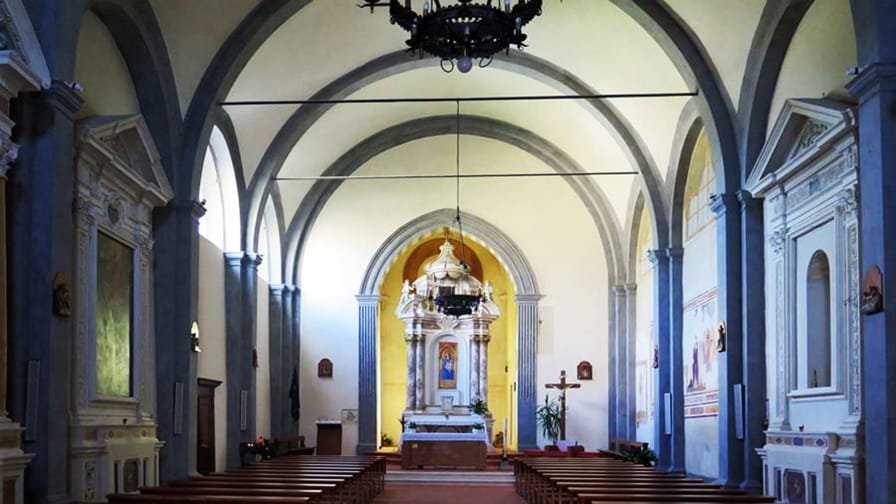
The Chiesa di Sant’Agostino in Asciano, Tuscany, is a compelling blend of medieval origins, Renaissance enlargement, and Baroque interior elegance—nestled on Corso Matteotti along a historic route toward Siena. Originally constructed in the 12th or 13th century, the church once stood alongside an Augustinian convent. It was later expanded in the mid-15th century, funded by the prominent Scotti family. A date marking 1472 is inscribed on a brick near the portal, commemorating this phase. The church retains its traditional single-nave layout even after later modifications, and its façade reflects a modest yet dignified gothic‑Romanesque brick style.
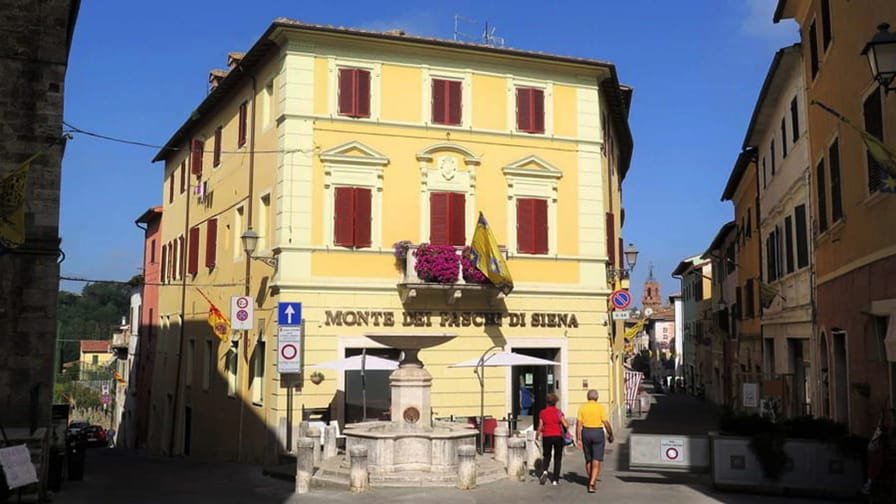
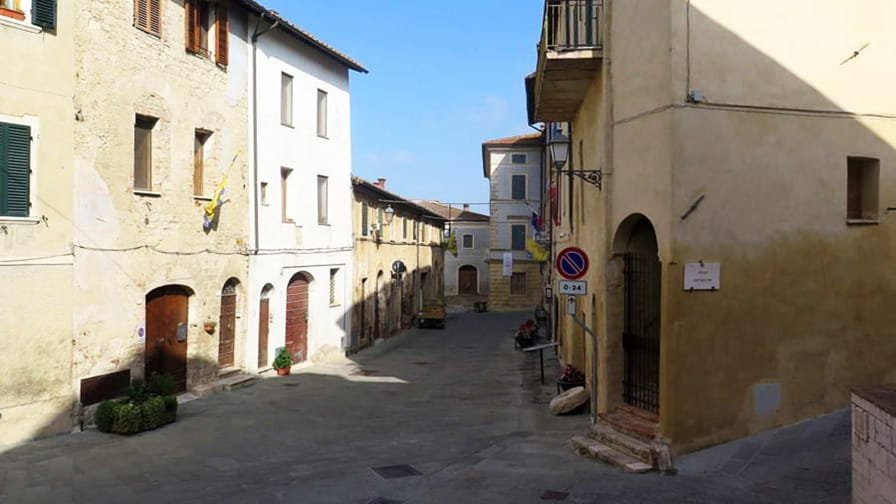
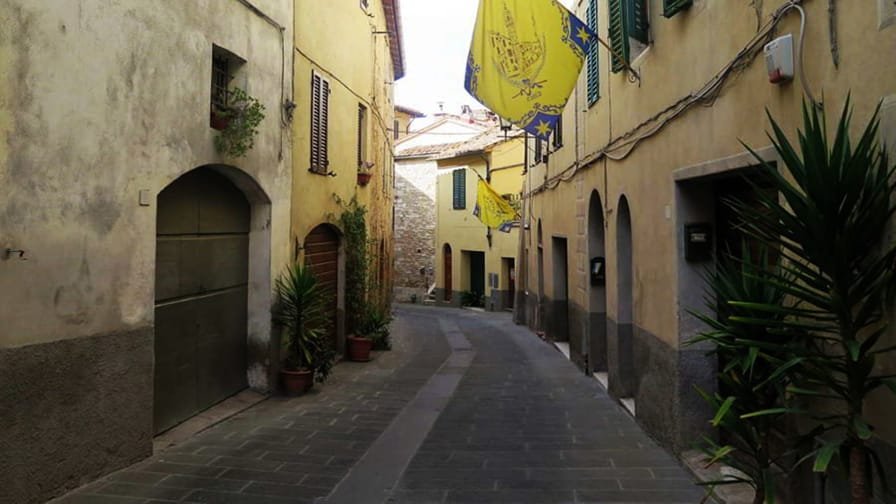
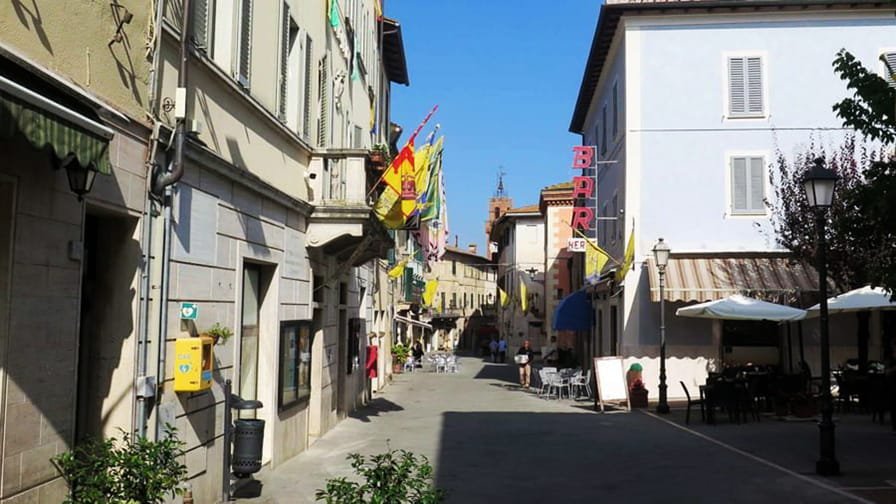
Corso Giacomo Matteotti is the vibrant main thoroughfare of Asciano, weaving through its historic centre and serving as both physical heartbeat and cultural spine of the town. Stretching from the ancient Porta Senese (also known as Porta Bianchi) to Piazza del Grano, this elegant street is lined with centuries‑old buildings, landmarks, cafés, shops, and heritage sites, making it a compelling introduction to Asciano’s rich past and lively present. Corso Matteotti traces the line of the historic Via Lauretana, an old pilgrimage and trade route connecting Cortona to Siena. Introduced in its current structure during the Napoleonic era, the street was designed to harmonize medieval patterns with later civic planning. Along this axis, Asciano’s medieval identity emerges through brick façades, narrow alleys, and noble towers, all testament to its storied evolution.
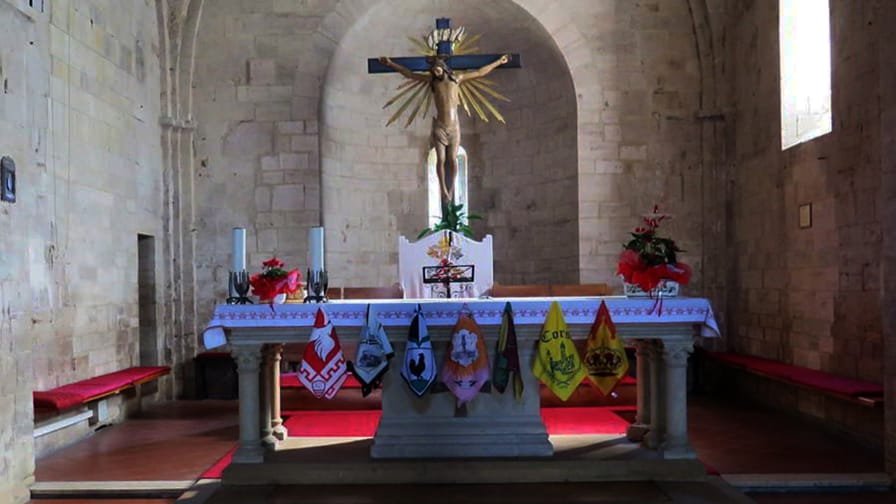
The Basilica di Sant’Agata in Asciano, Tuscany, is a luminous testament to nearly a thousand years of religious, artistic, and architectural heritage. Originally referenced in documents from 1029 and 1040, this church inherited the ancient baptismal function from the older Pieve di Sant’Ippolito, becoming Asciano’s principal parish church and later elevated to a minor basilica in 1991. Built in a transitional Romanesque‑Gothic style, the basilica adopts a Latin‑cross floor plan crowned by a hemispherical dome set within an octagonal lantern—an elegant feature rising at the intersection of transept and nave. The façade presents three blind ogival arches, leaf‑carved capitals, and a central rose window—all tell-tale marks of late medieval sophistication.
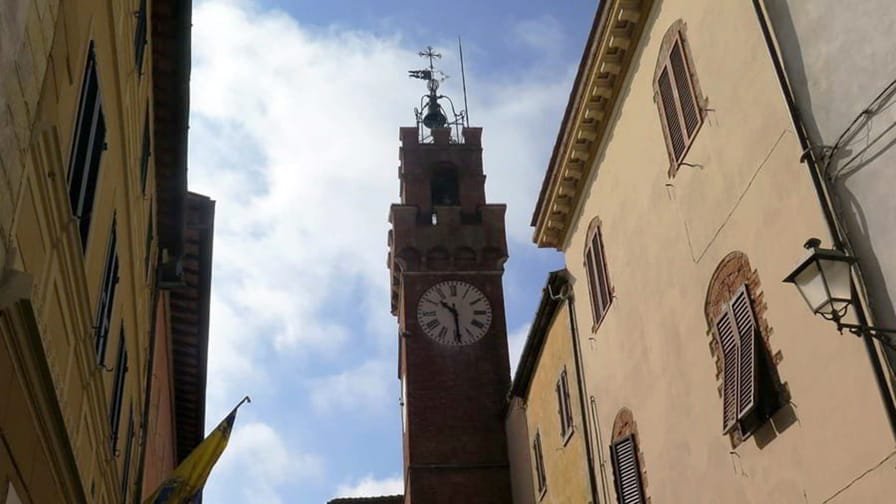
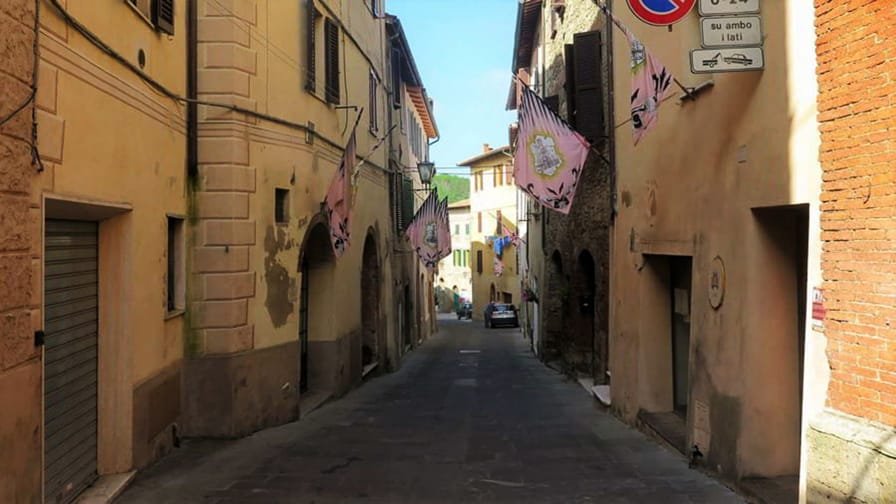
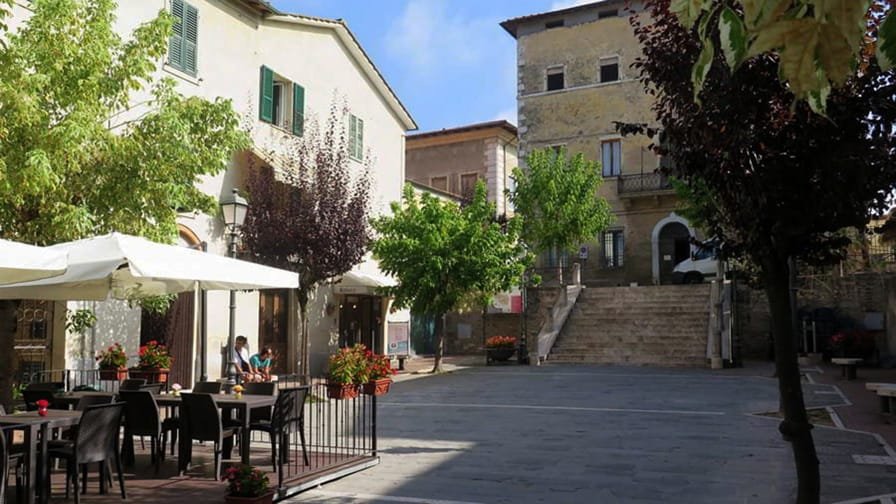
Photo Gallery of Walk – Via delle Fonti to Piazza del Grano
Approximately 1.23 km – 0.76 miles
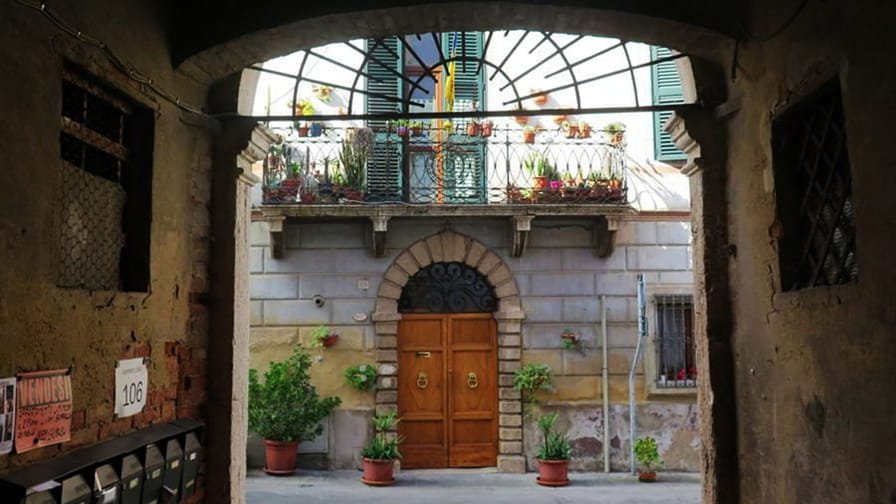
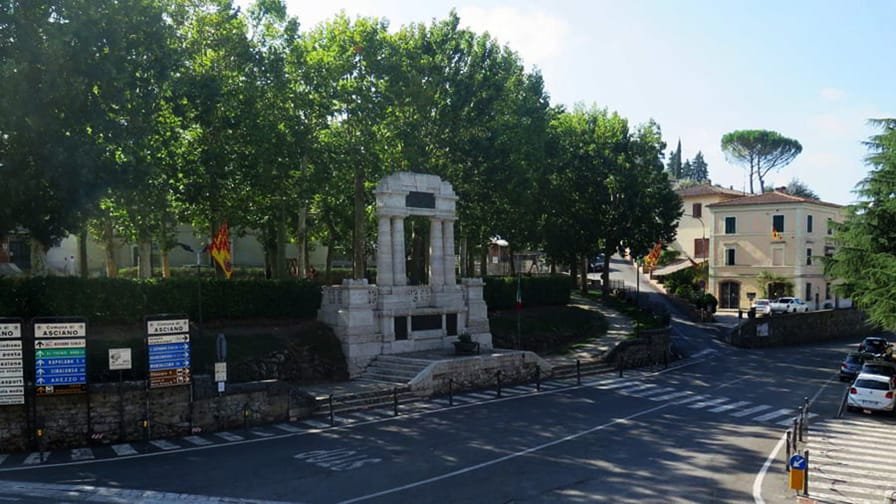
The walk starts in Chiesa di Sant’Agostino, Vicolo San Agostino – Corso Giacomo Matteotti – Piazza della Basilica – Parco delle Rimembranze – Via S. Francesco – return to Piazza della Basilica – Via Bartolenga – Piazza del Grano.



COPYRIGHT © 2018-2026 ITALY IN PHOTOS – ALL RIGHTS RESERVED