
HOME
REGIONS OF ITALY
PLACES IN ITALY
PLAN YOUR TRIP
Italy in Photos
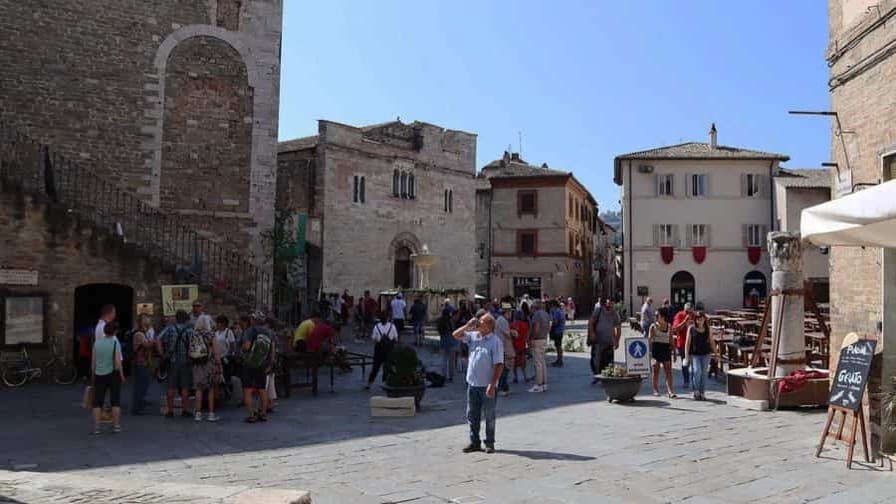
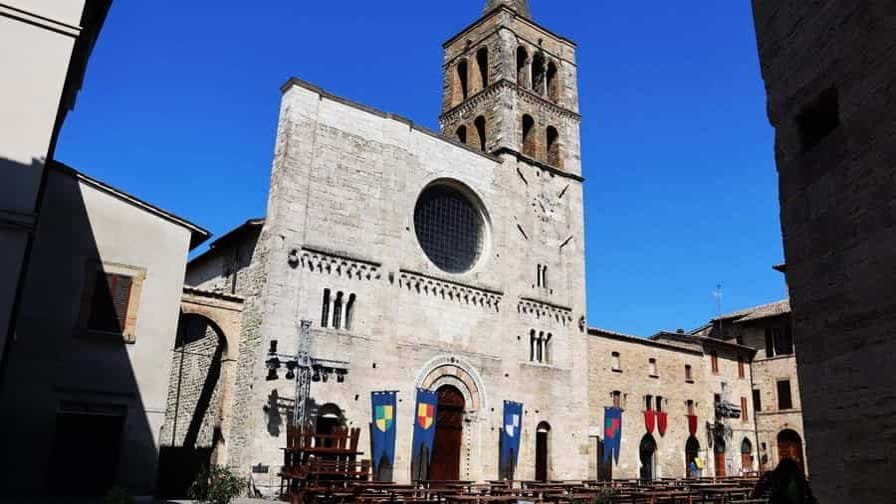
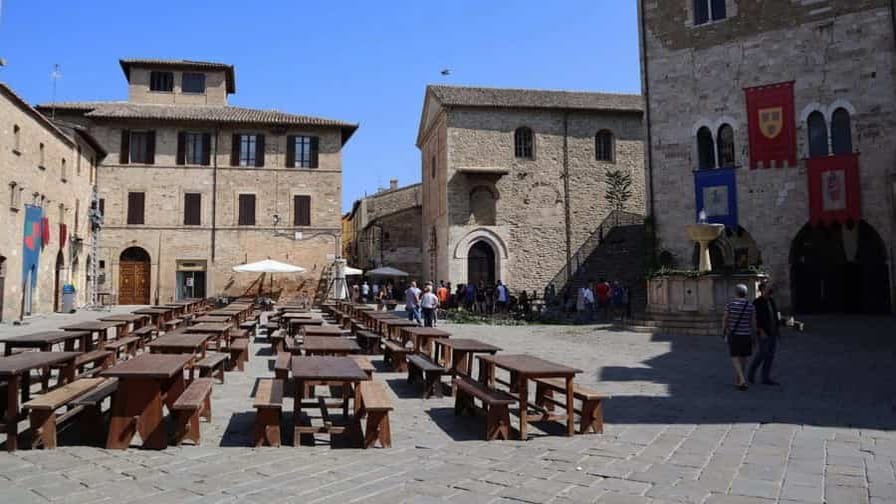
Piazza Filippo Silvestri, 06031 Bevagna PG, Italy (September 2020)
Bevagna
Delayed or cancelled flight?
Get up to £520!
You’ve got rights when your flight’s disrupted.
We enforce them and handle everything so you get paid
Bevagna is a small but historically rich town in the heart of Umbria, central Italy, known for its medieval character, ancient Roman roots, and strong sense of tradition. Surrounded by fertile countryside and gentle hills, Bevagna offers visitors a quiet and authentic experience, far removed from the crowds of larger Italian cities. Its well-preserved historic centre, harmonious architecture, and deep connection to local craftsmanship make it a captivating destination for those interested in history, culture, and slow travel.
The origins of Bevagna date back to Roman times, when it was known as Mevania, an important settlement along the Via Flaminia. Evidence of this ancient past can still be seen today in the remains of Roman baths, mosaics, and theater structures scattered around the town. Over the centuries, Bevagna developed into a prosperous medieval centre, retaining much of its original layout. Walking through its streets feels like stepping into a living museum, where layers of history are seamlessly woven into daily life.
At the heart of Bevagna lies Piazza Silvestri, one of Umbria’s most beautiful medieval squares. Framed by the Romanesque churches of San Silvestro and San Michele Arcangelo, along with elegant stone palaces, the square reflects the town’s historic importance and architectural harmony. This piazza has long served as the social and civic centre of Bevagna and continues to host gatherings, markets, and celebrations throughout the year.
Bevagna is especially renowned for its dedication to preserving traditional crafts and medieval customs. This commitment comes vividly to life during the Mercato delle Gaite, an annual festival that transforms the town into a recreation of 13th-century life. During the event, residents dress in period clothing, practice ancient trades such as papermaking, weaving, and blacksmithing, and prepare food using historical methods. The festival is both a celebration and an educational experience, offering visitors a rare opportunity to witness history brought to life with authenticity and pride.
The town’s surrounding landscape plays a vital role in its identity. The plains around Bevagna are nourished by rivers such as the Topino and Clitunno, creating ideal conditions for agriculture. Local products include olive oil, wine, grains, and legumes, all of which feature prominently in the regional cuisine. Meals in Bevagna are rooted in simplicity and seasonality, with dishes that highlight the natural flavours of Umbrian ingredients, often paired with wines from nearby Montefalco.
Despite its small size, Bevagna maintains a lively cultural rhythm shaped by local traditions, religious celebrations, and a close-knit community. Life here moves at a gentle pace, inviting visitors to slow down and appreciate the details—sunlight on stone walls, the sound of church bells, or conversations in the piazza. Bevagna embodies the timeless spirit of Umbria. Its blend of ancient history, medieval beauty, and living traditions creates an atmosphere that feels both intimate and enduring. For travellers seeking authenticity, craftsmanship, and a deep sense of place, Bevagna offers an experience that is quietly unforgettable.
Worth a Visit
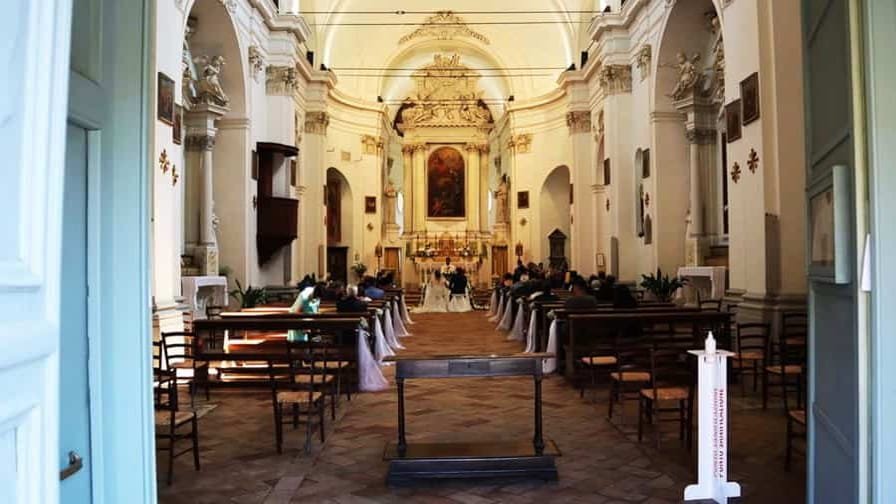
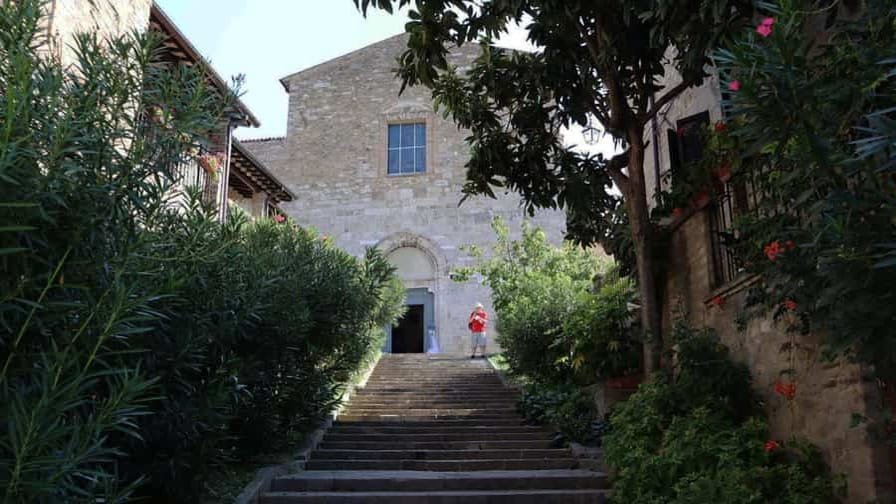
The Chiesa di San Francesco in Bevagna stands serenely at the highest point of this picturesque Umbrian town, embodying a harmonious blend of historic faith, Franciscan simplicity, and later Baroque elegance. Built in 1275 atop an oratory originally dedicated to Saint John the Baptist, the church occupies a site once used for a Roman temple, emphasizing its spiritual centrality through the ages. Its exterior manifests classic early Franciscan restraint, marked by a gabled façade and a dignified polystyle marble portal with foliated capitals. A slender bell tower nearby hints at later medieval additions, but overall, the exterior honours the austere tradition of the mendicant order.
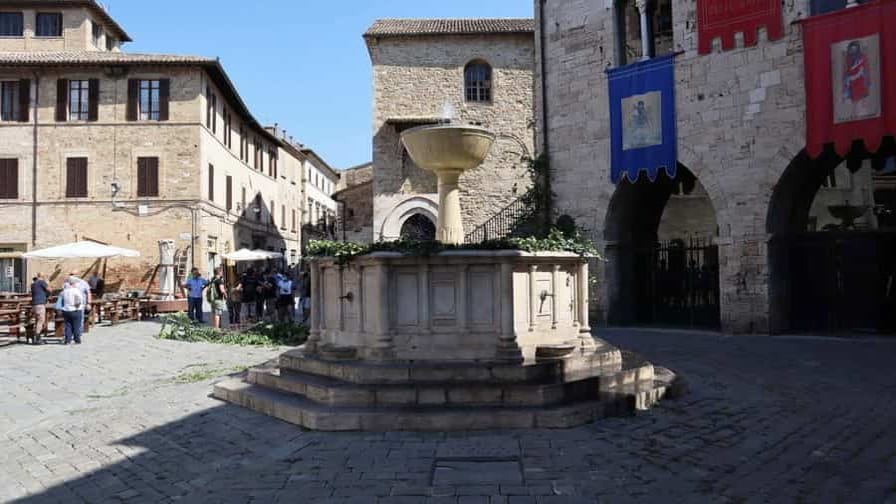
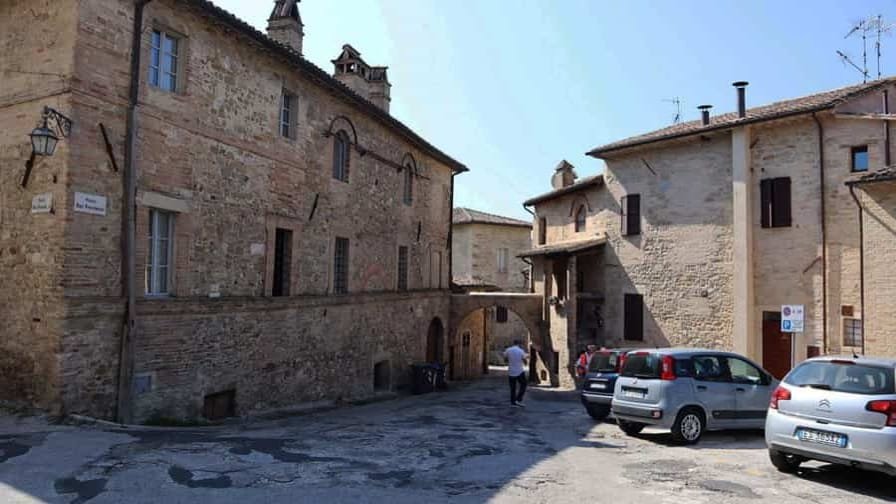
Piazza Filippo Silvestri, commonly known as Piazza Silvestri, is the historical and architectural heart of Bevagna, nestled in the Umbrian landscape. Embodying a vivid tableau of medieval urban life, its layout dates to the 12th – 13th centuries and unfolds with a deliberate irregularity that evokes the organic evolution of the town it anchors. Originally named for King Umberto I, the square was renamed in 1949 in honour of Filippo Silvestri, a native entomologist renowned for pioneering work in agricultural pest control, honoring both a local son and global scientific accomplishments. At nearly the centre of the piazza stood an octagonal cistern that provided water through the medieval period; this was replaced in 1896 by the neomedieval fountain that blends harmoniously with the surrounding architecture.
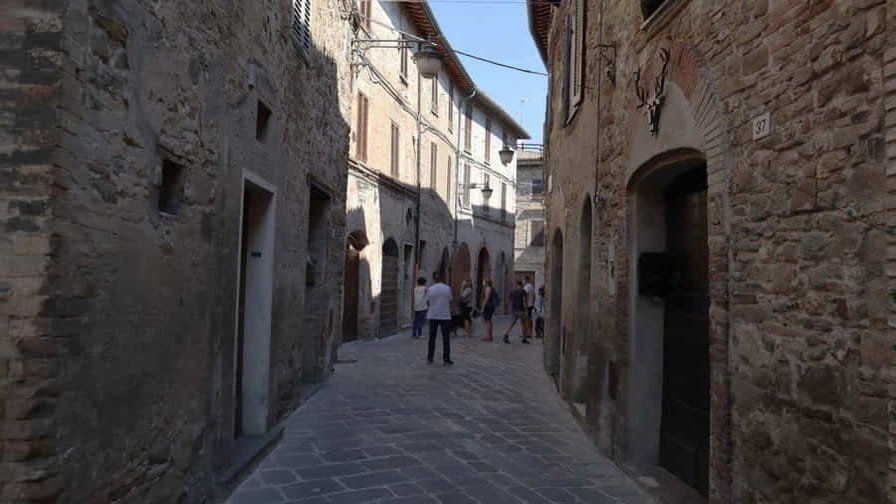
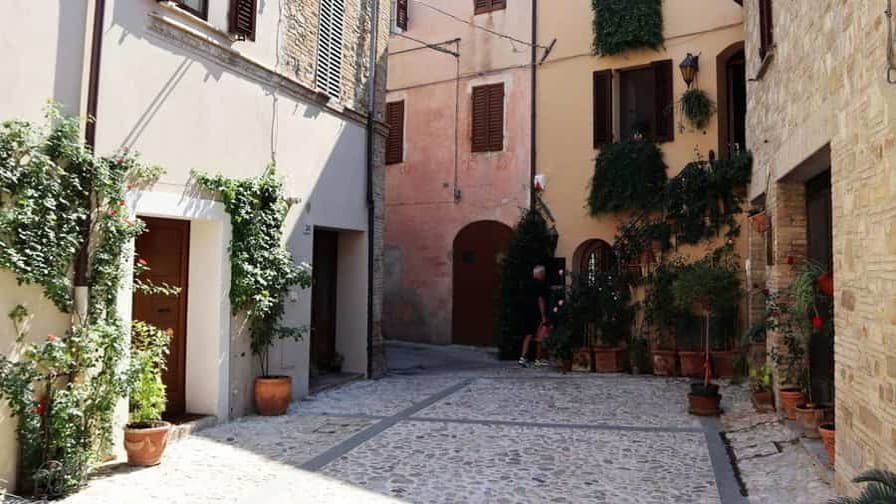
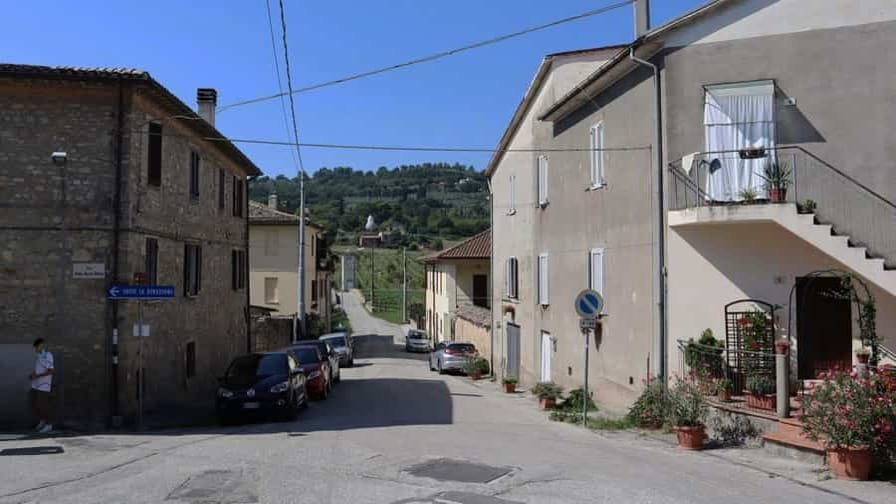
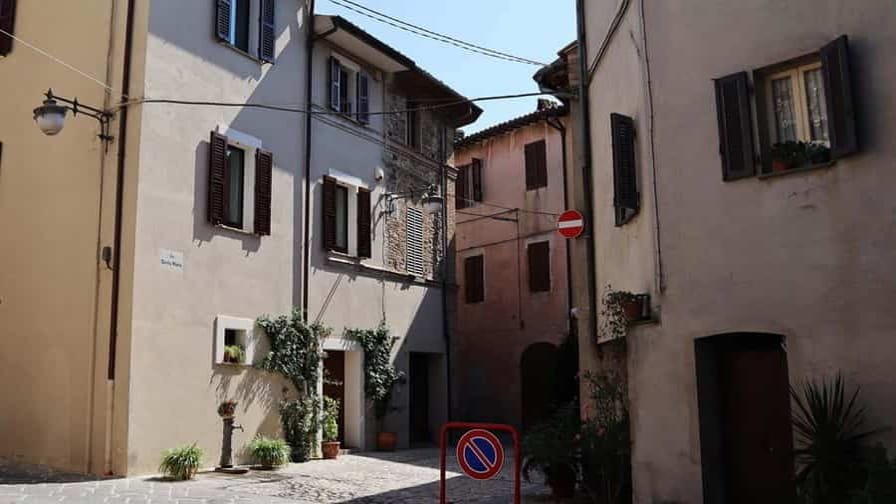
Photo Gallery of Walk in Bevagna – Piazza Giuseppe Garibaldi to Corso Amendola
Approximately 0.72 km – 0.45 miles
Description of Walk
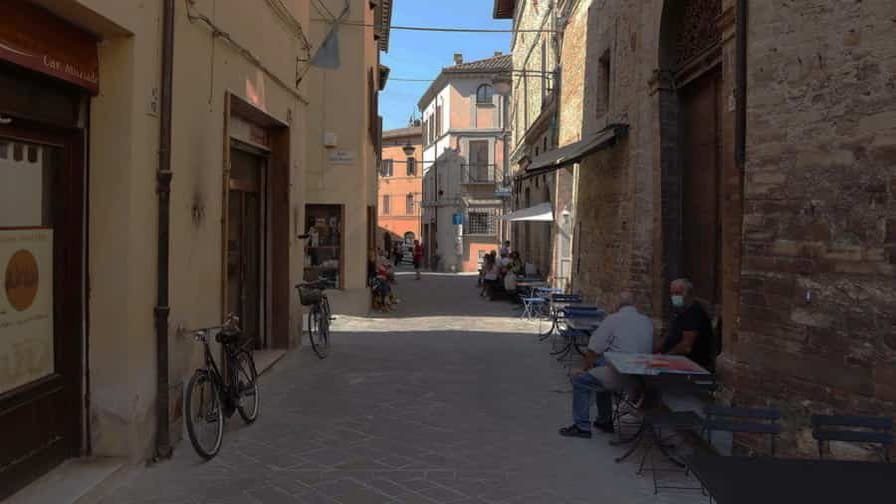
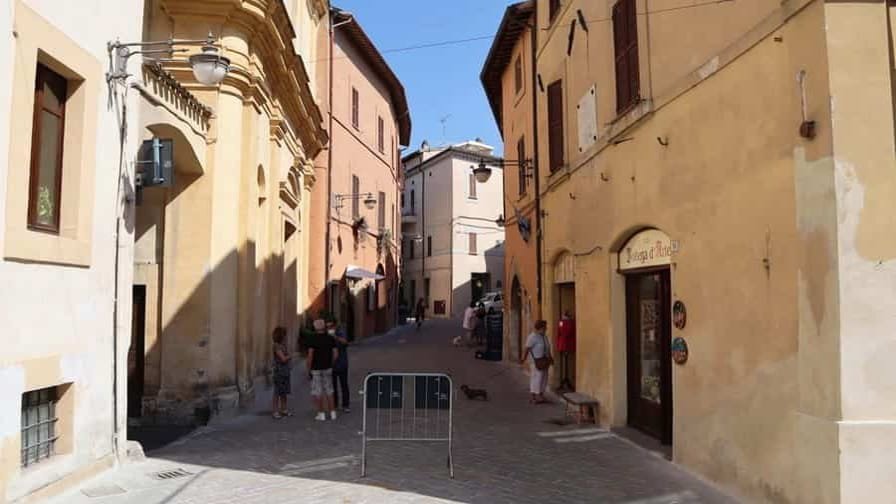
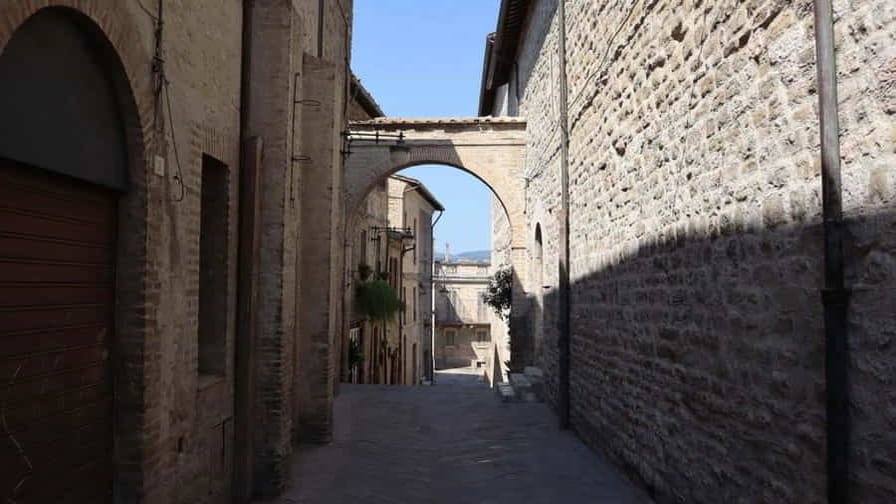
Bevagna is a beautifully preserved medieval town in the heart of Umbria, known for its Roman origins and timeless atmosphere. Surrounded by vineyards and olive groves, it offers a quieter alternative to more crowded Umbrian destinations, with stone streets and historic buildings that reflect centuries of history. The walk begins in Piazza Giuseppe Garibaldi, near the Chiesa di San Francesco, where Gothic architecture and a peaceful ambiance set the tone. Moving into Vicolo S. Francesco, the narrow alleyways create an intimate sense of stepping back in time. Emerging into Piazza San Francesco, the space opens slightly, allowing a pause to take in the historic surroundings. Continuing along Corso Giacomo Matteotti, the route follows one of the town’s main streets, lined with traditional houses and small local shops. Piazza Filippo Silvestri forms the heart of Bevagna, framed by remarkable medieval buildings and Roman remains, offering a striking focal point. From there, Corso Amendola leads deeper into the town, passing through quieter residential areas before reaching Piazza dell’Asilo. The walk then turns onto Via Santa Maria, a charming street with a local feel, before returning to Corso Amendola, completing a loop that captures Bevagna’s rich history and relaxed character.
COPYRIGHT © 2018-2026 ITALY IN PHOTOS - ALL RIGHTS RESERVED